Healthcare organizations today face one of the toughest hiring landscapes. From hospitals to community clinics, the demand for nurses, technicians, and support staff continues to rise, while turnover and burnout make it even harder to keep positions filled. Traditional recruiting methods such as manual resume reviews and job board postings are too slow to meet urgent staffing needs.
This gap affects not only hiring teams but also the quality of patient care. AI recruiting offers a new approach by speeding up resume screening, improving candidate matching, and giving recruiters data-driven insights. In this article, you’ll find ai recruiting healthcare explained as a practical solution that helps organizations build stronger teams faster.

What Is AI Recruiting in Healthcare?
AI recruiting in healthcare refers to the use of artificial intelligence to simplify and improve the hiring process across hospitals, clinics, and care facilities. Instead of relying only on manual reviews, AI tools automate resume parsing, candidate scoring, and even predictive analytics to identify the best matches for open roles.
Resume parsing extracts key information such as licenses, certifications, and clinical experience from applications. Candidate scoring then compares this information against job requirements, ranking applicants by relevance. Predictive analytics goes a step further by analyzing past hiring patterns and forecasting which candidates are most likely to succeed and stay long term.
This is different from traditional tools that only search for keywords or depend heavily on recruiter judgment. With AI, healthcare hiring becomes faster, more accurate, and easier to scale even when applicant volumes are high.
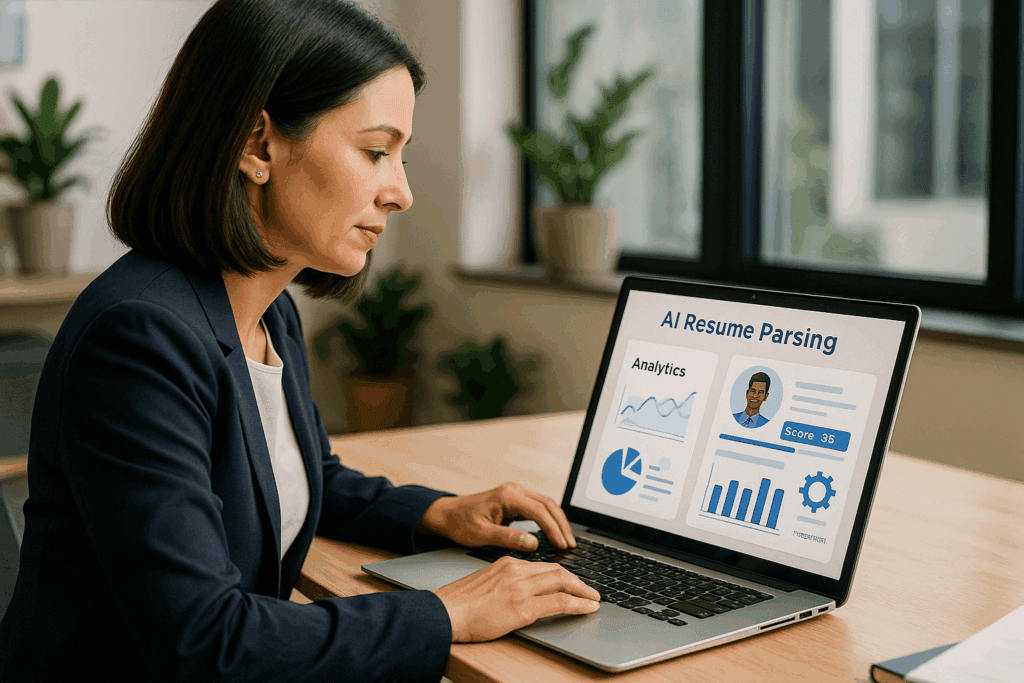

How AI Recruiting Works Step by Step
AI recruiting in healthcare follows a simple process that turns large applicant pools into clear, actionable shortlists. Here’s how it works:
Resume Parsing and Data Extraction
AI systems scan resumes in formats such as PDF or Word and extract structured details. Information like licenses, certifications, work history, and clinical experience is captured in seconds. This saves hiring teams from hours of manual data entry. Reliable parsing also ensures that critical credentials, such as nursing licenses, are not overlooked.
Candidate Matching
Once the data is extracted, AI compares each applicant against the job description. It evaluates required skills, certifications, and role-specific experience, ensuring that only candidates who meet essential criteria are prioritized. This step helps recruiters avoid wasting time on applicants who are clearly unqualified.
Predictive Analytics
Some platforms go further by analyzing historical hiring patterns. Predictive models estimate a candidate’s likelihood of success and long-term retention, giving recruiters deeper insight before making interview calls. This adds an extra layer of confidence when selecting applicants for critical roles.
Shortlisting
The system generates a focused pool of top candidates, reducing hundreds of resumes to a manageable shortlist. This makes it easier for recruiters and hiring managers to review applications and move faster. With fewer resumes to sift through, decision-making becomes more efficient and consistent.
Recruiter Oversight
Human input remains essential. Recruiters can adjust criteria, confirm rankings, and ensure that AI results align with the organization’s needs. This balance of automation and human judgment leads to faster, more accurate hiring decisions. It also allows teams to maintain control while benefiting from the speed of AI.
The State of Healthcare Hiring
Healthcare is one of the fastest-growing industries, yet it faces constant staffing shortages. Hospitals, clinics, and long-term care providers need more nurses, technicians, and support staff than the current workforce can supply. This demand is only increasing as populations age and healthcare needs expand.
High turnover adds to the challenge. Burnout among healthcare professionals means roles must be refilled more often, putting continuous pressure on recruiting teams. At the same time, many organizations still rely on outdated methods such as manual resume reviews or generic job board postings. These approaches take too long and often fail to reach the right candidates.
Key Benefits of AI Recruiting in Healthcare
AI-driven recruiting gives healthcare organizations powerful advantages that directly address staffing challenges. Here are the most important benefits:
Faster Hiring
AI speeds up resume review and shortlisting, reducing screening time by up to 70%. This helps hospitals and clinics fill critical roles quickly, preventing staffing shortages that can disrupt patient care. Faster hiring also means less overtime strain on existing staff.
Improved Candidate Quality
By analyzing skills, certifications, and relevant experience, AI ensures that only well-qualified candidates rise to the top. Recruiters see applicants who are truly aligned with healthcare roles, such as licensed nurses or certified technicians, making interviews more productive. Better matches ultimately lead to stronger performance on the job.
Reduced Bias
AI applies the same evaluation criteria to every applicant, supporting fairer hiring practices. Consistent screening helps minimize unconscious bias, giving all candidates an equal opportunity to be considered. This is especially important in healthcare, where diversity can strengthen patient care outcomes. A more diverse workforce also reflects the needs of a diverse patient population.
Lower Costs
Automating manual screening reduces reliance on expensive external recruiters or staffing agencies. Healthcare providers can manage more of their hiring in-house, freeing up budget for training and retention programs. Over time, the savings add up to a significant return on investment. These savings can be redirected to patient-focused improvements.
Better Retention
Predictive analytics identify candidates who are not only qualified but also likely to stay longer. This means fewer repeat hires, less turnover, and more stability within care teams. Stronger retention improves staff morale and continuity of patient care. Consistent teams also help patients build trust with familiar caregivers.
Final Words
Healthcare organizations face urgent staffing challenges, from rising demand to high turnover. Traditional hiring methods cannot keep pace with the speed and accuracy required to fill critical roles. AI recruiting changes this by streamlining resume review, improving candidate matching, and reducing hiring bias.
The result is faster, fairer, and more cost-effective hiring. For hospitals, clinics, and care facilities, adopting AI means building stronger teams that directly support better patient care.
Discover how Sourcio.ai powers ai recruiting healthcare by helping clinics, hospitals, and care providers hire faster and smarter. Start your journey today and see how AI can transform your hiring process.